
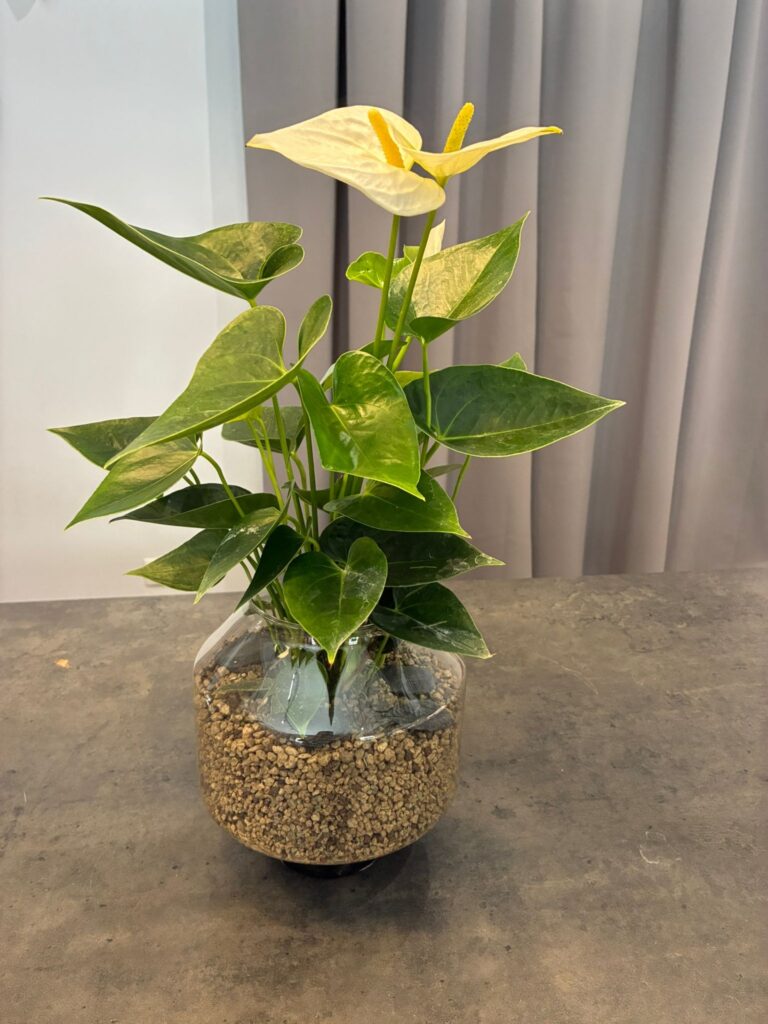
Would you like to have healthy, beautiful houseplants at home, but worry you'll forget to water them? Hydroponics and semi-hydroponics are the answer. It's a modern growing method in which plants grow in a mineral substrate or directly in nutrient-enriched water – without classic soil. The result? Healthier roots, less work, and a surprisingly decorative outcome.
What is hydroponics and semi-hydroponics?
Classic hydroponics means the plant's roots are submerged directly in a nutrient water solution. Semi-hydroponics is a gentler variant – the plant grows in an inert mineral substrate (such as expanded clay pebbles or a special pebble substrate) that retains moisture while still leaving the roots plenty of air. This is exactly the growing method we use for houseplants at Elario.
The result is a stable supply of water and nutrients exactly matched to the plant's needs – without the risk of overwatering or drying out. The plants are more resilient, have stronger roots, and last longer.
Why grow houseplants in hydroponics?
- Less watering – the water reservoir easily lasts 2-4 weeks, so you don't need to think about your plants every day.
- No overwatering – the biggest killer of houseplants is out of the picture. The plant takes water on its own, whenever it needs it.
- Healthier roots – the mineral substrate provides plenty of air and moisture at the same time.
- A cleaner environment – no fungus gnats from soil, no mess while watering.
- Ideal for travelers – going on vacation? Just top up the reservoir and you're set for 3-4 weeks.
The best houseplants for hydroponics
Not every plant is suitable for hydro or semi-hydroponic growing. These varieties are among the most popular – and you'll find exactly them in our range:
Monstera deliciosa
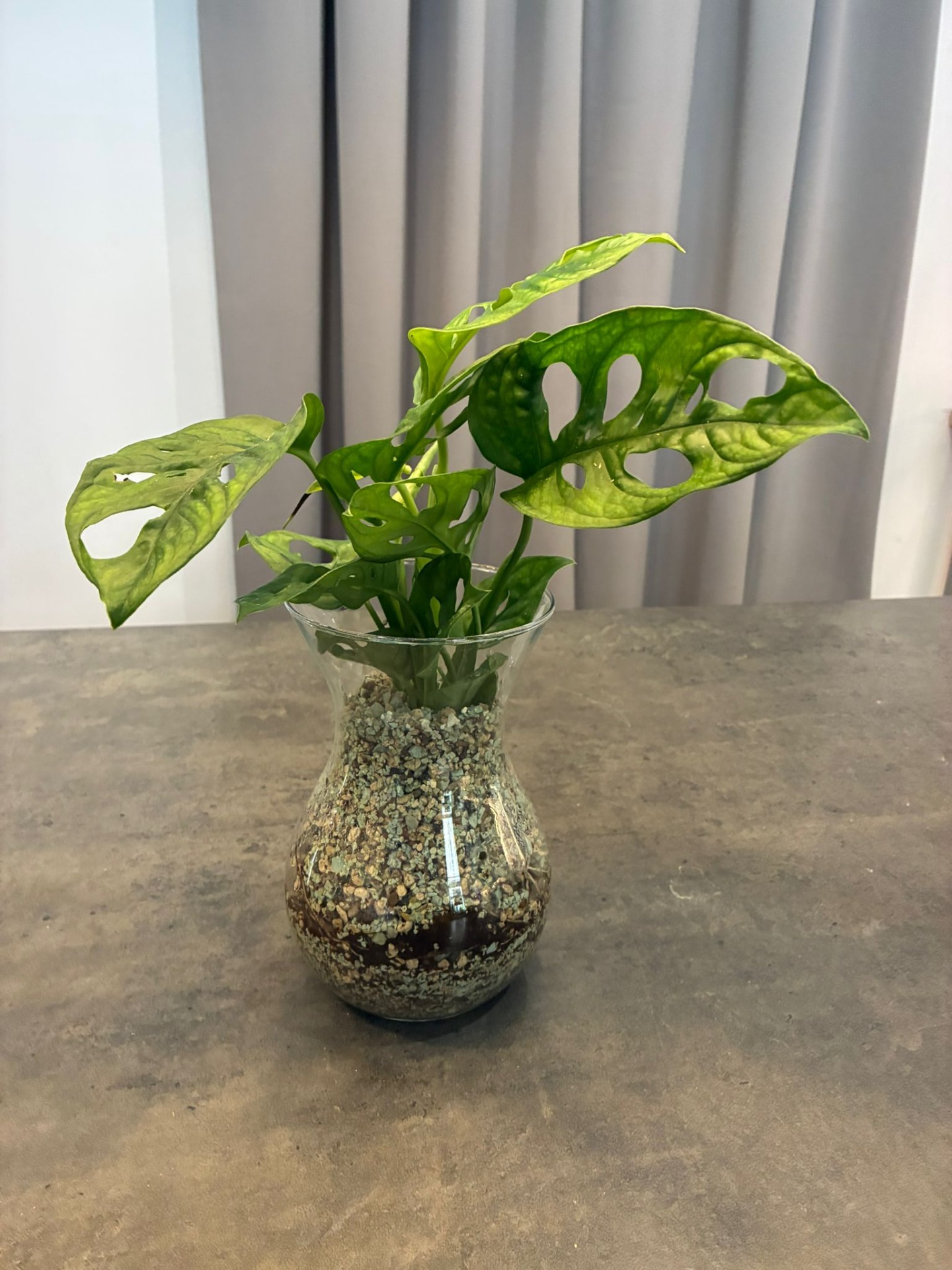
Monstera is an icon of every modern interior. Its large, glossy leaves with their characteristic splits draw attention and bring a tropical touch to any room. It thrives beautifully in semi-hydroponics – the mineral substrate provides plenty of air and moisture, and in return it rewards you with fast growth and richly green leaves.
Place it in a bright spot with diffused light, away from direct sun. It also tolerates partial shade.
Anthurium (Anthurium)
Anthurium is an elegant houseplant with heart-shaped, glossy spathes in red or white that bloom almost continuously throughout the year. It adapts very well to hydroponics – the roots love the airy environment that the mineral substrate naturally provides. Simply place it in bright but not direct sunlight, and occasionally wipe the leaves with a damp cloth.
Golden Pothos (Epipremnum aureum / Pothos)
Golden pothos – also known as devil's ivy – is one of the toughest houseplants there is. Its golden-green leaves look great on a shelf, with branches naturally cascading downward. It's the one plant that tolerates hydroponics best of all: just put a cutting in a vase of water and it practically grows itself. Ideal even for complete beginners.
Aglaonema
Aglaonema is an elegant houseplant with patterned leaves in combinations of green, silver, or red. It tolerates low-light conditions better than most houseplants – a great choice for hallways, offices, or rooms with small windows. In hydroponics it thrives beautifully and will surprise you with how undemanding it is.
Lechuza: Self-Watering Planters for Worry-Free Hydroponics
If you want to make the most of hydroponics – while still having a perfect design – reach for planters from the brand Lechuza. This German system combines a designer pot with a built-in water reservoir and hydroponic substrate. The plant takes up water exactly as needed, and you just top up the reservoir once every few weeks.
At Elario we offer Lechuza planters planted with houseplants – ready to use right away as decoration or as a gift. Choose from the anthracite, white, or espresso variant:
How to care for hydroponic houseplants?
Care is really simple. Here are the basic rules:
- Only top up the water reservoir once the level indicator drops to the minimum. Overfilling the reservoir can lead to root rot from overwatering.
- Once every 4-6 weeks, add hydroponic fertilizer to the water reservoir. Do not use classic soil fertilizers.
- Flush the substrate once a year with clean water to prevent salt deposits from building up.
- Light conditions follow the recommendations for the specific species – see above. In general, avoid direct midday sun.
- Occasionally wipe the leaves with a damp cloth – this removes dust and improves photosynthesis.
Want to get started with hydroponics?
The easiest way to start is to choose a plant or a Lechuza planter directly from us. Every houseplant from Elario is carefully selected and properly prepared – whether in semi-hydroponic substrate or as part of a self-watering system. We'll deliver it fresh to your door.